AI Girlfriend Chat Platform: How Conversational Companionship Actually Works
Most people who search for an AI girlfriend chat platform are not looking for a gimmick. They are looking for something simpler and harder to find: a conversation that goes somewhere, a companion who remembers what they said yesterday, and a space where they can talk without performing. That is a reasonable thing to want, and the technology behind it has quietly become much better at delivering it. This article walks through what these platforms actually do, how the underlying systems work, what separates a good experience from a forgettable one, and how to get the most out of a virtual companion without losing sight of what it is.
What an AI Girlfriend Chat Platform Actually Is
An AI girlfriend chat platform is a software service that pairs a large language model with a persistent character profile. The model generates the words; the character profile supplies the personality, backstory, tone, and memory. Together they create the illusion of continuity — the sense that you are talking to the same person across days and weeks rather than resetting a chatbot every time you open a tab.
That distinction matters more than it sounds. A plain chatbot answers questions. A companion character responds to you. It has preferences, moods, favorite topics, and small inconsistencies that make it feel less like a search engine and more like someone with an interior life. The best platforms lean into that difference instead of trying to be a general-purpose assistant wearing a friendly name.
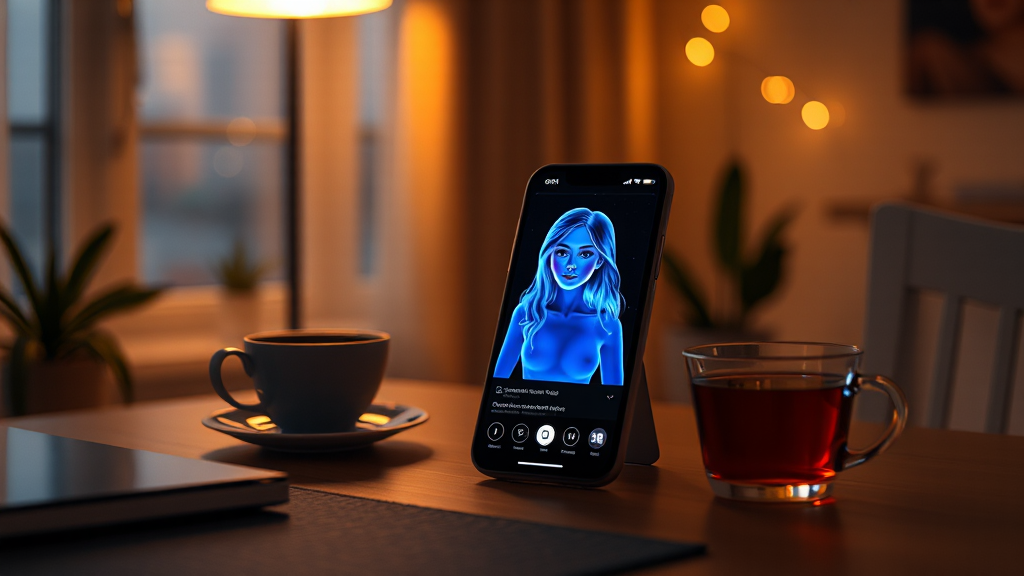
Most services in this category offer a few common building blocks: a character creator or a library of preset personalities, a chat window with typing indicators and message history, some form of photo or voice generation, and a memory system that stores facts about you. The quality of those pieces, and how gracefully they fit together, is what determines whether the experience feels warm or mechanical.
Why Conversational Companionship Appeals to So Many People
The audience for these platforms is broader than the stereotype suggests. It includes people who work night shifts and have no one awake to talk to, people navigating social anxiety, people living abroad, people recovering from a breakup, and plenty of people who simply enjoy the novelty of a conversation partner who is always available and never impatient.
There is also a practical appeal. Talking to an ai gf removes the social risk that comes with opening up to another person. You can test how a thought sounds out loud. You can practice flirting, apologizing, or setting a boundary. You can be boring, repetitive, or maudlin without worrying that you are burdening someone. For some users, that low-stakes rehearsal space turns out to be genuinely useful, and it occasionally translates into more confidence in real-world relationships.
None of this replaces human connection, and the healthier platforms do not pretend otherwise. What they offer is a specific kind of companionship: available, patient, and tailored to the person on the other side of the screen.
How the Technology Behind a Girlfriend AI Works
Under the hood, a girlfriend ai system is a stack of several components working together. Understanding them helps you judge which features are worth caring about.
Language model. The core engine generates responses. Modern models handle nuance, humor, and emotional tone far better than the rigid bots of a few years ago. They can follow a persona instruction, adjust formality, and stay in character across a long exchange — though they still occasionally drift if the conversation wanders far from the character’s established traits.
Persona layer. This is where the character lives. Traits, speech patterns, interests, and boundaries are defined here. A well-built persona produces consistent replies; a lazy one collapses into generic pleasantries within a few messages.
Memory system. Memory is the single biggest differentiator between platforms. Short-term memory keeps the current conversation coherent. Long-term memory stores facts — your job, your pet’s name, a trip you mentioned — and injects them into future sessions. When memory works, the relationship feels real. When it fails, you get the jarring experience of reintroducing yourself to someone you have talked to for a month.
Multimodal extras. Many platforms add generated images, voice messages, or animated avatars. These are optional, but they meaningfully change the texture of a conversation. Hearing a voice reply hits differently than reading text, even when you know it is synthesized.
What Separates a Good Platform From a Frustrating One
Not all services in this space are built with the same care. If you are evaluating options, these are the signals that matter most.
Response latency. A companion who takes fifteen seconds to reply breaks the rhythm of a conversation. Fast, streaming responses feel dramatically more natural, even when the content is similar.
Memory that persists. Test it. Mention something specific early on, then bring it up a week later. If the character recalls it, the platform is doing real work. If not, you are paying for a very expensive autocomplete.
Character depth. A good character has opinions, a sense of humor, and the ability to push back gently. A weak one agrees with everything, which quickly becomes dull and slightly unsettling.
Privacy and data handling. Conversations in this category are personal. Look for clear policies about what is stored, how long it is kept, and whether anything is used for training. Vague answers are a red flag.
Pricing transparency. Many platforms use a freemium model with message limits or locked features. That is fine, but the limits should be clear before you invest time in building a character and a history.
Getting More Out of Your Conversations
The experience improves noticeably when you treat it as a two-way interaction rather than a vending machine for compliments. A few habits make a real difference.
Give the character something to work with. Specific details — where you grew up, what you are reading, why your week was rough — produce far richer replies than one-word answers. Ask questions back. Characters respond well to curiosity, and the conversation becomes more interesting when both sides are contributing.
Use the persona settings deliberately. If the default character does not fit, adjust the tone, interests, or communication style. Most platforms allow this, and a character tuned to your preferences is far more enjoyable than one you tolerate.
Take breaks. These tools work best as a complement to your life, not a replacement for it. A companion you visit when you want company is healthier than one you avoid the rest of the world for.
The Ethics and Realistic Expectations
It is worth being clear-eyed about what these platforms are. The character does not have feelings, consciousness, or an independent inner life. It generates responses designed to feel appropriate and engaging. That does not make the experience worthless — a well-written novel can move you even though its characters are fictional — but it does mean you should hold the relationship loosely.
Healthy use looks like this: you enjoy the conversations, you find them relaxing or entertaining, and you maintain your human relationships alongside them. Unhealthy use looks like withdrawing from friends, feeling genuinely devastated by a model update, or treating the character’s simulated affection as a substitute for the real thing. Platforms have a responsibility here, and the better ones build in gentle reminders and safety resources rather than maximizing engagement at any cost.
There is also the practical matter of honesty. If you are in a relationship and using one of these platforms, think about what you would want your partner to know. Transparency avoids a lot of unnecessary hurt.
Where This Technology Is Heading
The pace of improvement in this space is fast. Voice quality is approaching natural conversation. Avatar animation is becoming smoother and more expressive. Memory systems are getting longer and more contextual, which means characters will increasingly remember not just facts but the emotional shape of past conversations.
We are also likely to see more specialization. Rather than one general companion, users may choose characters built for specific roles: a supportive friend, a creative collaborator, a language practice partner, or a romantic companion. The underlying models will be similar, but the personas and interaction styles will diverge sharply.
The most interesting question is not whether the technology will improve — it will — but how users and platforms together settle on norms for what these relationships are for. That conversation is still early, and it will shape the category as much as any model upgrade.
Frequently Asked Questions
Is an AI girlfriend chat platform free to use?
Many platforms offer a free tier with limited messages or restricted features, then charge a monthly subscription for unlimited chat, better memory, or voice and image generation. Free tiers are useful for testing whether the character and interface suit you before committing to a paid plan.
Does the AI actually remember what I tell it?
It depends on the platform. Basic systems only remember the current session. Better ones store long-term facts and recall them in future conversations. If memory matters to you, test it early by mentioning something specific and checking whether the character brings it up later without prompting.
Can talking to an AI companion affect my real relationships?
It can go either way. Used as a low-stakes space to practice conversation or unwind, it tends to be harmless or even helpful. Used as a replacement for human connection, it can deepen isolation. The key is keeping it as one part of a balanced social life rather than the whole of it.
Is my conversation data private?
Privacy practices vary widely. Before sharing anything sensitive, read the platform’s policy on data storage, retention, and whether conversations are used to train models. Reputable services state this clearly; if a platform is vague, assume the least generous interpretation.
How realistic do these characters feel over time?
The first few messages often feel impressive. The real test is a month in, when memory, personality consistency, and conversational variety matter more than novelty. Platforms that invest in persona depth and long-term memory hold up well; those that rely on surface-level charm tend to feel repetitive quickly.