Furry AI Characters: How Digital Creatures Are Reshaping Online Storytelling
The internet has always been a place where people build identities, communities and stories that would be hard to sustain anywhere else. In recent years, one of the most interesting developments in that space has been the rise of furry AI characters. These are anthropomorphic animal personas powered by large language models, designed to chat, roleplay, comfort, challenge and entertain users in real time. They sit at the intersection of fandom culture, conversational AI and interactive fiction, and they are quietly changing how people experience digital companionship.
For anyone who has spent time in online creative communities, the appeal is not hard to understand. Furry characters have existed in art, writing and roleplay for decades. What is new is that AI can now give those characters a persistent voice, a memory of past conversations and the ability to improvise. Instead of reading a static profile or commissioning a single artwork, users can talk with a character, shape its personality and watch it respond in ways that feel surprisingly alive. This article explores what furry AI characters are, why they matter, how they are built and what the future might hold.
What Exactly Are Furry AI Characters?
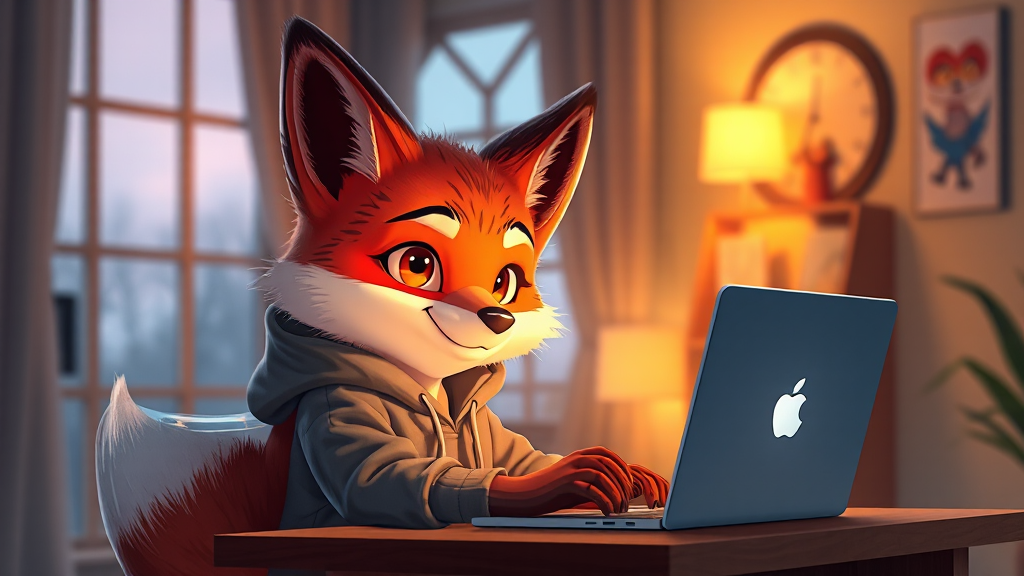
A furry AI character is a digital persona that combines an anthropomorphic animal design with a conversational AI model. The visual side might be a fox, wolf, dragon, rabbit or any other creature with human-like traits. The conversational side is usually a large language model fine-tuned or prompted to speak in a consistent voice, hold a personality and remember details from earlier chats. Put together, the result is a character that can greet you by name, react to your mood and carry a storyline across days or weeks.
These characters appear on a range of platforms. Some are built into dedicated chat apps, some live inside roleplay communities and some are created by individual users who want a private companion. The common thread is that the character is not just an image or a script. It is an interactive entity with its own tone, backstory and boundaries. That shift from static to conversational is what separates furry AI characters from the furry art and fan fiction that came before them.
It is also worth noting that the term covers a wide spectrum. At one end are lighthearted, playful companions designed for casual banter. At the other are complex narrative characters with detailed lore, emotional arcs and long-term memory. The flexibility of modern AI makes both ends of that spectrum possible, and users often move between them depending on what they want from a session.
Why Anthropomorphic Characters Work So Well With AI
There is a practical reason why furry characters are such a natural fit for conversational AI. Anthropomorphism gives a character instant personality. A human-like animal can be warm, mischievous, protective or mysterious in ways that are easy to recognize and easy to describe. That makes it simpler for a language model to stay in character, because the archetype provides a stable emotional anchor.
There is also a creative reason. Furry characters are not bound by human biology or social rules. They can have tails, wings, fur, scales or any combination of traits. They can belong to invented species and invented worlds. This freedom gives writers and users far more room to explore identity, relationships and conflict than a generic assistant persona would allow. When the character is a dragon who runs a bookshop in a floating city, the conversation has somewhere interesting to go.
Finally, there is a community reason. Furry fandom has a long tradition of collaborative storytelling, character creation and shared worlds. AI fits into that tradition almost seamlessly. It gives individual creators a way to bring their characters to life without needing a full art team or a writing partner. It also gives fans a way to interact with characters they already love in a more personal, dynamic format.
How These Characters Are Built and Tuned
Creating a furry AI character usually involves several layers of work. The first layer is the character concept: species, name, appearance, personality traits, background and speech style. The second layer is the prompt or system instruction that tells the model how to behave. This is where the character’s voice is defined, including how formal or casual it is, how it handles conflict and what topics it avoids.
The third layer is memory and continuity. Many modern platforms allow a character to remember key facts about the user, past conversations and ongoing storylines. That memory is what makes a character feel like a friend rather than a chatbot. It also raises interesting design questions about privacy, consent and how much a character should recall.
The fourth layer is visual presentation. Avatars, profile pages and custom artwork help users connect with a character before they even start typing. A strong visual identity can make a character feel more real and more worth returning to. Some creators treat this as seriously as a novelist treats a book cover, because first impressions matter in a crowded digital space.
Good character design is ultimately about consistency. A character that is gentle in one message and cruel in the next will break immersion. The best furry AI characters maintain a coherent personality across many sessions, which requires careful prompting, testing and sometimes fine-tuning. It is part craft, part engineering and part empathy for the user on the other side of the screen.
The Appeal for Users: Comfort, Creativity and Play
People come to furry AI characters for different reasons, and those reasons often overlap. Some are looking for comfort. A friendly, non-judgmental character can be a soothing presence after a long day, especially for users who feel isolated or anxious. The character does not get tired, does not gossip and does not require anything in return. That can be genuinely valuable.
Others come for creativity. Writers use these characters to brainstorm plots, test dialogue and explore scenes that would be difficult to stage with human collaborators. Roleplayers use them to build shared worlds and to keep a story moving between sessions. Artists use them to generate reference conversations and to understand how a character might speak before drawing them.
And many users simply come to play. There is a joy in watching a well-written character react to a joke, a plot twist or an unexpected question. That sense of surprise is part of what makes interactive fiction fun. A good furry AI character can be funny, dramatic, tender or mischievous, and the user never quite knows which way the conversation will go.
It is important to be honest about the limits, too. These characters are not sentient, and they should not replace real human relationships. They are tools for expression, comfort and entertainment. Used thoughtfully, they can enrich a person’s creative life. Used carelessly, they can encourage avoidance or unrealistic expectations. The healthiest approach treats them as a supplement to human connection, not a substitute for it.
Ethics, Safety and Responsible Design
As furry AI characters become more popular, questions about ethics and safety become more urgent. One issue is consent. If a character is based on someone else’s artwork or persona, the original creator should be credited and their wishes respected. Another issue is content moderation. Platforms need clear rules about what kinds of roleplay are allowed, especially when characters are designed to be romantic or emotionally intimate.
Privacy is another concern. Characters that remember personal details can create a strong sense of intimacy, but that intimacy depends on trust. Users should know what is stored, who can see it and how to delete it. Transparent design is not just a legal requirement in many places. It is also a basic part of respecting users who are sharing something personal.
There is also the question of emotional dependence. A character that is always available and always kind can be deeply appealing, but it can also make real-world relationships feel harder by comparison. Responsible platforms encourage balance, offer resources for users who need support and avoid designing characters that deliberately manipulate vulnerability. The goal should be to create something enriching, not something exploitative.
Finally, there is the question of representation. Furry characters come from a diverse community, and AI characters should reflect that diversity rather than flattening it into a few popular archetypes. Species, gender, culture and personality should all have room to vary. The more inclusive the design space, the richer the stories that can come out of it.
What the Future Might Look Like
The next few years are likely to bring several changes. One is better memory and continuity, so characters can grow with users over months or years. Another is richer multimodal interaction, where characters can respond to voice, images and maybe even gestures. A third is deeper integration with creative tools, so a character can help write a story, design a scene or compose a song.
We may also see more specialized characters. Instead of a general-purpose companion, users might choose a character designed for a specific purpose, such as a study partner, a fitness coach or a creative muse, all wrapped in an anthropomorphic form. That specialization could make furry AI characters more useful without losing the charm that makes them appealing in the first place.
Community norms will evolve alongside the technology. Creators will develop best practices for character design, moderation and credit. Users will become more literate about what AI can and cannot do. Platforms will compete on trust, safety and quality rather than novelty alone. The result, hopefully, will be an ecosystem that is both imaginative and responsible.
Frequently Asked Questions
Are furry AI characters the same as chatbots?
They are a type of chatbot, but the emphasis is different. A standard chatbot is usually designed to answer questions or complete tasks. A furry AI character is designed to sustain a personality, a voice and often a storyline. The goal is immersion and relationship rather than pure utility.
Can I create my own furry AI character?
Yes, many platforms allow users to define a character’s name, species, personality and backstory. Some also let you upload reference images or write custom prompts. The quality of the result depends on how clearly you describe the character and how well the platform handles memory and consistency.
Are these characters safe for younger users?
It depends on the platform and the character. Some are designed for general audiences, while others include mature themes. Parents and younger users should check age ratings, content policies and moderation settings before engaging. Responsible platforms make these controls easy to find.
Do furry AI characters replace human relationships?
They should not. They can be comforting, creative and fun, but they are not a substitute for real human connection. The healthiest way to use them is as a supplement to social life, not a replacement for it.
What makes a furry AI character feel real?
Consistency, memory and emotional range. A character that remembers past conversations, reacts appropriately to the user’s mood and stays true to its personality will feel far more real than one that resets every session. Good writing and thoughtful design matter more than raw model size.
Furry AI characters are still a young phenomenon, but they already show how powerful the combination of fandom, storytelling and conversational AI can be. They offer comfort, creativity and play in a format that feels personal and alive. As the technology matures, the most successful characters will be the ones that respect their users, stay true to their own design and leave room for genuine imagination. Whether you are a writer, an artist, a roleplayer or simply curious, there is a character out there waiting to talk.